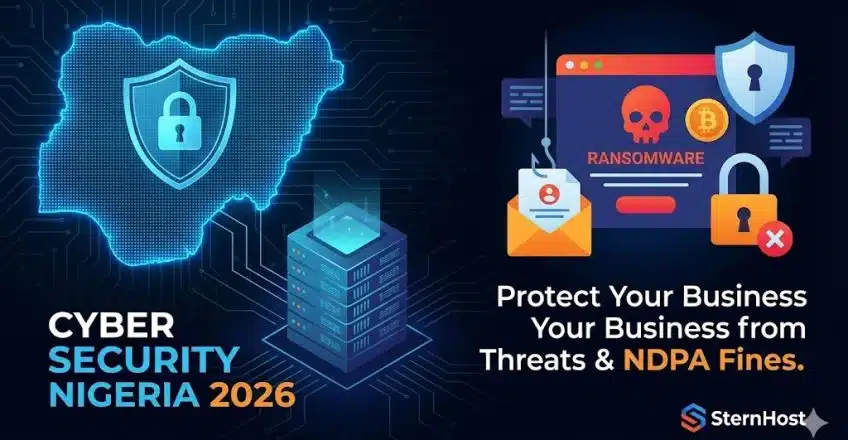

The digital landscape in Nigeria is evolving at an unprecedented pace, but so are the threats. As our local economy becomes increasingly dependent on digital payments and remote work, cybercriminals have shifted their focus. They are no longer just targeting multi-national banks; they are actively hunting small and medium-sized enterprises (SMEs) across Lagos, Abuja, and beyond.
If you are running a business in 2026, ignoring your digital defenses is a guaranteed path to financial ruin. Following the strict enforcement of the Nigeria Data Protection Act (NDPA), a data breach doesn’t just mean losing money to hackers—it means facing massive regulatory fines for failing to protect consumer information. Here is a comprehensive guide on how to fortify your operations against the most aggressive attacks this year.
The Reality of Cyber Security Nigeria in 2026
Recent reports highlight a sobering picture of the local threat landscape. Ransomware attacks on Nigerian institutions have surged, while AI-driven phishing campaigns are successfully tricking even the most tech-savvy employees.
The vast majority of data breaches happen due to simple human error or a lack of basic access controls. You do not need a massive IT budget to protect your business; you just need to implement the right foundational strategies to close the most common loopholes.
Top Threats in the Cyber Security Nigeria Landscape
Cybercriminals exploit predictable vulnerabilities. By understanding their tactics, you can proactively secure your business environment.
1. Phishing and Business Email Compromise (BEC)
Phishing remains the number one threat to Nigerian businesses. Today’s attacks are highly sophisticated, often disguised as internal emails from your HR department or trusted vendors requesting “urgent” invoice payments. In BEC scams, attackers impersonate executives to trick accounting teams into wiring funds to fraudulent accounts.
-
Never trust urgent financial requests via email without verifying them through a phone call or in-person confirmation.
-
Train your staff to scrutinize email addresses carefully; look for slight misspellings or mismatched domains.
-
Deploy advanced email filtering software that automatically flags and quarantines suspicious messages before they reach your employees’ inboxes.
2. Ransomware and Data Extortion
Ransomware is malicious software that encrypts your company files, locking you out of your own system until a hefty ransom (usually in cryptocurrency) is paid. In 2026, attackers are employing “double extortion” tactics—stealing the data first and threatening to leak it online if the ransom isn’t met.
-
Implement a strict 3-2-1 backup strategy: Keep 3 copies of your data, across 2 different media types, with 1 copy stored securely offline.
-
Ensure your offline backups are entirely disconnected from your primary network so ransomware cannot spread to them.
-
Install reputable endpoint detection and response (EDR) anti-malware software on all company devices.
Strengthening Your Internal Defenses
Under the NDPA regulations managed by the Nigeria Data Protection Commission (NDPC), protecting the personal data of your customers is a strict legal obligation. Failing to implement robust access controls is a massive liability.
3. Essential Cyber Security Nigeria Access Controls and MFA
A massive percentage of breaches stem from compromised credentials. Sharing a single administrative login across multiple employees is a massive security risk that hackers actively exploit.
-
Enforce Multi-Factor Authentication (MFA) across all company accounts, email platforms, and financial portals.
-
Adopt a “Zero Trust” policy. Grant employees access only to the specific data and systems they need to perform their daily jobs.
-
Use enterprise password managers to generate and store complex, unique passwords, eliminating the habit of reusing “admin123” across multiple sites.
4. Secure Remote Work and Wi-Fi Networks
As hybrid work environments become the norm, your security perimeter has expanded well beyond your office doors. Employees connecting to company networks via unsecured public Wi-Fi in cafes or airports are prime targets for Man-in-the-Middle (MITM) attacks.
-
Mandate the use of a Virtual Private Network (VPN) for any remote access to company resources.
-
Ensure your office Wi-Fi networks use robust encryption (WPA3) and hide your administrative network from guest users.
-
Keep all operating systems, web browsers, and business applications updated with the latest security patches to close known vulnerabilities.
By adopting these proactive measures, you can drastically reduce your risk profile. Furthermore, ensuring your digital foundation is secure is exactly why we always recommend pairing strong internal policies with a robust infrastructure.