
If you drive a car in Nigeria, there is one thing you never leave home without: a spare tire.
You don’t plan to get a flat tire on Third Mainland Bridge or along the Abuja-Kaduna expressway. You hope you never need that spare. But the peace of mind comes from knowing that if something goes wrong, you are not stranded. You have a backup plan.
Your website is the vehicle for your business. You have invested money in design, time in uploading products, and effort in marketing. But what happens if that vehicle crashes?
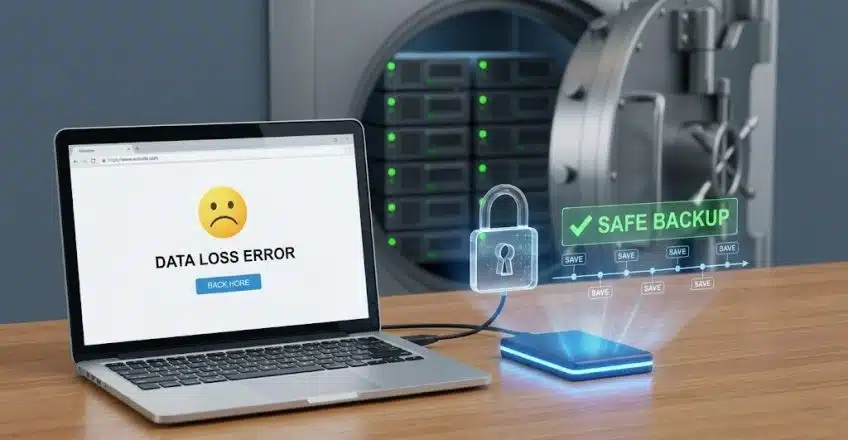
Imagine waking up tomorrow morning to find your website is a blank white screen. Your product images are gone. Your customer orders have vanished.
This isn’t a horror movie; it happens every day. Without a current website backup, that crash could be permanent. Here is why having a recovery strategy is non-negotiable for Nigerian businesses in 2026.
What Exactly Is a Website Backup?
Strip away the technical jargon. A website backup is simply a copy.
It is a complete “snapshot” of your website at a specific point in time—all your files, images, text, and the database that holds your customer information. This snapshot is stored securely in a separate location from your live website.
If your live website breaks, gets hacked, or accidentally deleted, you don’t have to rebuild from scratch. You simply take the “snapshot” (the backup) and restore it. Your site is back online as if nothing ever happened.
The 3 Main Threats to Nigerian Websites (Why You Need Backups)
You might think, “My site is small, nobody will target me.” But disasters on the web are rarely personal; they are often accidental.
1. Human Error (The “Oops” Moment)
This is the most common cause of data loss. You try to update a plugin, and it conflicts with your theme, crashing the site. Or perhaps you hire a freelance developer who accidentally deletes a critical file while trying to fix something else. A website backup is your “undo” button for major mistakes.
2. Malicious Attacks
While we don’t like to admit it, cyberattacks are a reality. Automated bots roam the internet looking for vulnerabilities in WordPress sites. If a hacker gets in, they might hold your data for ransom or wipe it completely. If you have a clean website backup, you don’t have to negotiate with criminals. You just wipe the server clean and restore your safe version.
3. The “Village People” Factor (Unpredictability)
Sometimes, things just break. A server update goes wrong, a database gets corrupted, or a natural disaster hits a data center overseas. In an environment as unpredictable as ours, relying on luck is not a business strategy.
The Wrong Way vs. The Right Way to Backup
Many site owners think they are safe because they installed a free backup plugin three years ago and forgot about it.
The Wrong Way: Relying solely on free plugins that save the backup on the same server as your website. If the server goes down, your website and your backup go down with it. It’s like keeping your spare key inside the car you just locked.
The Right Way (The SternHost Way): A true disaster recovery plan requires remote, automated backups.
At SternHost.ng, we don’t leave your safety to chance. Our hosting plans include automated systems that take daily snapshots of your site and store them on secure, off-site cloud servers.
If the worst happens, you don’t need to panic or call a developer. You log into your control panel, select yesterday’s backup, hit “Restore,” and you are back in business in minutes.
Conclusion: Don’t Drive Without a Spare
Running a business in Nigeria is hard enough without worrying about losing your entire digital existence overnight.
A website backup is the cheapest insurance policy you will ever buy. It turns a potential business-ending disaster into a minor 10-minute inconvenience.
Don’t wait until you are stranded on the digital roadside to realize you need a spare tire.
[Ensure your hard work is safe. Choose SternHost.ng hosting with secure, automated daily backups included.]