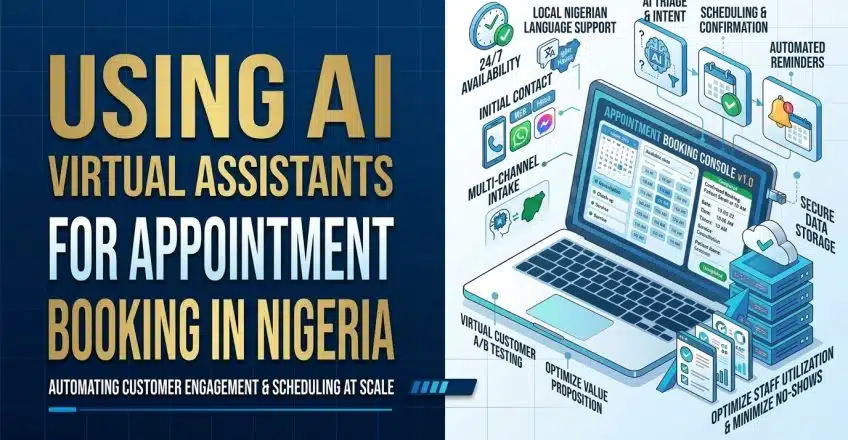

Coordinating meetings with corporate clients or international partners is a notoriously frustrating process for Nigerian tech teams. When a founder attempts to schedule a product demo or a discovery call, the back-and-forth emails negotiating time zones and available slots drain valuable hours. In a business environment where unexpected power grid failures or sudden traffic gridlocks in Lagos can force last-minute changes, manually tracking reschedules across multiple calendar apps quickly leads to disastrous double bookings and missed opportunities. By the time a human assistant finally locks in a time, the prospective client’s enthusiasm may have already faded.
Transitioning from manual coordination to intelligent automation completely removes this administrative bottleneck. Deploying an autonomous system to handle your scheduling ensures that incoming meeting requests are processed instantly, regardless of your immediate internet connectivity. These intelligent tools do more than just send a static calendar link; they actively read your existing agenda, understand your preferred working hours, and negotiate times conversationally with your clients. This creates a seamless, highly professional booking experience that operates flawlessly twenty-four hours a day.
Automating Workflows with AI Virtual Assistants for Appointment Booking
Relying on traditional scheduling software often falls short when multiple stakeholders are involved, as static links cannot negotiate or adapt to sudden changes. Modern intelligent agents, however, use natural language processing to interpret requests like “Can we push this to tomorrow afternoon?”. They instantly evaluate your connected calendars, identify scheduling conflicts, and automatically propose alternative times without requiring you to manually check your agenda. This dynamic flexibility ensures your team remains agile and responsive, which is critical for securing high-value contracts in competitive regional markets.
Furthermore, integrating conversational scheduling directly into your existing communication channels drastically reduces friction. Instead of forcing a client to leave WhatsApp or email to navigate a complex booking page on a slow mobile network, the intelligent agent can handle the entire booking lifecycle conversationally. Tools designed for these specific workflows can even call clients to negotiate new times via phone, update your calendar, and trigger confirmation emails, providing an enterprise-grade concierge experience without the overhead of a full-time administrative staff.
Why AI Virtual Assistants for Appointment Booking Prevent Calendar Conflicts
The financial and reputational damage of missing a critical corporate meeting due to a calendar mix-up is severe. When a local agency is juggling multiple client retainers, overlapping meetings or failing to account for time zone differences immediately signals unprofessionalism. Implementing an automated system acts as a digital shield for your focus time. The software actively monitors your schedule, rearranging flexible internal tasks to accommodate urgent client calls, thereby eliminating the fragmented schedules that kill daily productivity.
Additionally, these systems are highly context-aware. If a repeat client requests a follow-up, the agent remembers their past preferences and automatically suggests their usual meeting format and duration. This continuity builds immense trust. By automating the reminders and managing rescheduling logic proactively, your business drastically reduces no-show rates while ensuring your engineering or sales teams are never interrupted during their protected deep-work blocks.
Tools and Steps for Deploying AI Virtual Assistants for Appointment Booking
Constructing a reliable, self-updating scheduling infrastructure requires connecting a robust calendar API with a conversational reasoning engine. You must select tools that support deep customization and integrate seamlessly with the platforms your local clients already use.
You must follow these precise steps and utilize platforms like Cal.com, Retell AI, or Vellum to construct your automated booking pipeline:
-
Set up a core calendar infrastructure using an open-source, highly customizable tool like Cal.com to manage your team’s availability and routing logic.
-
Generate a secure API key from your scheduling platform dashboard to grant the artificial intelligence secure access to read and modify your open time slots.
-
Integrate a conversational agent, such as Cal.ai or a voice agent built via Retell AI, and connect it directly to your scheduling platform’s API.
-
Configure the agent’s prompt to act as an executive assistant, explicitly instructing it to check calendar availability before ever suggesting a time to a client.
-
Connect the agent to your primary communication channels, allowing it to process inbound booking requests via email, Slack, or direct website voice calls seamlessly.
-
Set up automated pre-meeting reminders and post-meeting follow-up workflows within the platform to reduce no-shows and keep your sales pipeline moving.