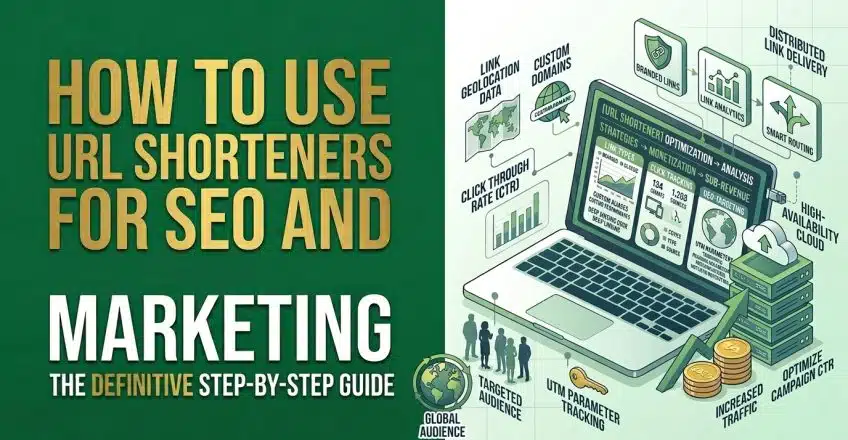

Long, messy web addresses filled with random characters, database IDs, and complex tracking codes are a conversion killer. When you share a massive link on social media or in an email campaign, it immediately looks unprofessional, untrustworthy, and prone to breaking across different screen sizes. A URL shortener solves this aesthetic nightmare by condensing a massive string of text into a clean, clickable, and highly trackable asset. However, using these tools incorrectly can severely damage your search engine rankings and trigger aggressive email spam filters.
The Ultimate Guide to Using URL Shorteners for SEO
The relationship between condensed links and search engine algorithms is fundamentally built on server redirection protocols. When a user clicks a shortened link, the hosting server must instantly route them to the final destination. For search engines like Google to understand that the original, long URL is the one that deserves the ranking credit, the shortener must use a permanent 301 redirect.
A 301 redirect acts as a digital change-of-address form, passing all the acquired link equity, PageRank, and domain authority directly to your main website. If your chosen shortening tool uses a temporary 302 redirect instead, search engines will assume the move is not permanent, and your organic rankings will be entirely wasted.
Best Practices for Deploying URL Shorteners for SEO
Moving beyond basic link shrinking, modern digital marketing requires a strategic approach to how these links are structured and shared across the internet. Relying heavily on generic, free domains often associates your legitimate brand with spammers and malicious bots.
-
Deploy Branded Domains: Instead of using a generic domain, purchase a short, custom domain name specifically for sharing. Branded short links drastically increase click-through rates because users inherently trust a URL that visibly carries your company name.
-
Integrate UTM Parameters: Before you shorten a link, attach Google Analytics UTM tags to the original long URL. When the link is condensed, these tags become completely hidden, keeping the URL visually clean while still passing granular data about traffic sources straight to your analytics dashboard.
-
Monitor Link Rot: A massive danger in using free external shortening services is that if the service shuts down or changes its pricing model, every link you have ever generated breaks instantly. This destroys your backlink profile and ruins the user experience.
Leveraging Strategic Analytics via URL Shorteners for SEO
The true power of a condensed link lies in the hidden data it captures the exact millisecond it is clicked. Premium shortening tools act as advanced traffic monitors, allowing you to bypass the complex setup of full-scale analytics dashboards for quick, actionable insights.
You can instantly see which geographic regions are clicking your links, what devices they are using, and the exact time of day your audience is most active. This allows you to aggressively split-test different marketing messages on platforms like X or LinkedIn. By using separate short links for each post, you can definitively measure which specific copywriting angle drives the highest volume of traffic to your storefront.
Running a custom, self-hosted shortener or managing a growing digital brand requires a rock-solid foundational server. Stop relying on fragile third-party tools that hold your links hostage or slow down your redirect speeds. Secure your custom branded domains and deploy your digital infrastructure on SternHost today. For just ₦1,195.00/month, you receive the raw server speed, unmetered bandwidth, and enterprise-grade reliability necessary to keep your marketing campaigns running flawlessly 24/7.